Book One · Live · 29 September 2026

Learn magick from the grimoire of grimoires.

Six weeks from now, you’ll be working real magick out of the one book the entire Western tradition was built on. Cornelius Agrippa published Three Books of Occult Philosophy in 1533. Herbs and stones, planets and stars, names and spirits — it’s all in there, and almost everything written since has borrowed from it. Nobody has taught the whole thing until now, because nobody had a translation you could actually work from. We made one. This enrollment is Book One — six weeks, live, starting 29 September: $997 $797 for the founding group. Books Two and Three run as their own classes later; the Complete Agrippa below reserves all three now for less than buying them one at a time.

$997 $797 founding tuition

72 seats total, in pods of 8–12. Founding tuition ends when this opens to the public, so this is the best rate it’s at right now.

Enroll in Book One — founding tuition $797

Two ways to pay: in full, or split with Klarna at checkout for US buyers. Tuition rises to $997 once public enrollment opens.

The source everything else copied from

One book. Three courses. Every kind of magick there is.

A grimoire is just a spellbook — a manual for working magick. Most grimoires teach one tradition. Agrippa wrote the whole system down at once, in three books, and everything after him is a branch off it. That’s why people call it the grimoire of grimoires. You don’t need to know any of this already. That’s what the six weeks are for.

Color alchemical miniature from the Aurora Consurgens in gold, red, and blue
I

Natural magick

Herbs, stones, the living world

The magick of physical things — plants, minerals, animals, places, and the hidden virtues Agrippa says run through them. If you’ve ever heard of green witchcraft or folk magic, this is the root it grew from.

This course — live class 29 Sept–3 Nov 2026

Hand-colored zodiac man plate mapping the twelve zodiac signs onto a human figure
II

Celestial magick

Planets, stars, numbers, timing

The magick of the sky — planetary hours, astrological timing, sacred number and geometry, talismans made under the right stars. Every "do this on a Tuesday" instruction you’ve ever read traces back here.

A separate course — class Q1 2027

Color alchemical plate of a consecrated glass vessel holding a peacock, set like a shrine between columns
III

Ceremonial magick

Names, spirits, rites

The magick of ritual — divine names, angels and intelligences, consecration, and the ceremonies later orders spent centuries elaborating. This is where the Golden Dawn and everything downstream got its shape.

A separate course — class Q2 2027

This isn’t lodge material, and you need no initiation, no order, and no one’s permission to read it. It’s the textbook the lodges were built out of — and for the first time, it’s taught whole.

What you’re enrolling in

Book One — Natural Magic. One course, six weeks.

Books Two and Three are separate courses, sold separately, run in later classes — not included here. See One book. Three courses. above for how they differ.

Dates
29 Sept — 3 Nov 2026
Length
Six weeks
Live sessions
Tuesdays, 90 min
Commitment
6–8 hrs / week
The text
Included — no book to buy
Miss one?
Recorded, yours for life

What actually changes

You become the magician other people ask for answers.

By week six, you’ve run six real operations with your own hands and watched them work. You open any correspondence table and know exactly where it comes from and why. Someone asks you a question about magick, and the answer is just there — not a half-remembered quote, but something you tested yourself and trust. That’s a different person than the one who started week one.

You’ll have a pod of eight to twelve people who did it with you, so the certainty doesn’t fade the day the course ends. It becomes who you are.

The instruments

You, with instant command of a 500-year-old system.

Six tools, built into Magick.Me, give you what used to take a scholar years to assemble by hand: a Planetary Clock, an Operation Composer, a searchable table of correspondences, an Apothecary, an Augury Reader, and Chat With Agrippa — an AI trained on the book and everything behind it. Nothing to download or install. They open inside your account and stay there — yours for life — arriving one by one across the six weeks as each is finished.

The Planetary Clock

Ch. 22–31

You always know the hour, without doing the arithmetic. Agrippa’s system runs on unequal hours — reckoned from your local sunrise and sunset, not the clock on the wall. Open it inside your Magick.Me account and it computes them for wherever you are, shows the hour you’re in and the next one you want, and carries the Moon’s phase and sign alongside. Nothing to download.

You stop guessing when to act. You just act, on the right day and hour, every time.

The Operation Composer

Ch. 22–49, 61–73

You can build a complete, correct operation from a single sentence. One operation in Book One takes material from a dozen scattered chapters. Name an intention inside your account and the Composer assembles it the way Agrippa argues it: ruling planet, correct day and hour, stones and plants and colors, the matching suffumigation, place, preparation of mind, and the shape of the words — then prints as a working sheet.

Nothing is invented. Every line cites the chapter it came from, so you check the machine against the book — and you’re the one who decides it’s right.

The Table of Correspondences

Ch. 22–33, 44, 48, 52

You stop looking things up and start knowing them cold. The rulership chapters, turned into a table built into your account that you can actually search — ask what the Moon rules, or what rules coral, and narrow it to stones, plants, animals, or parts of the body. Every entry links straight back to its page in the text.

Where the 1533 printing is damaged, the entry says so — you always know exactly how firm the ground is under you.

The Apothecary

Ch. 43–45

You get the real recipes and the judgment to read them safely — which is the actual skill this course teaches. The fumigation recipes as Agrippa gives them, live in your account with each ingredient marked: safe and sourceable, hazardous with a substitution and the reasoning behind it, or historical-only and not to be attempted.

You can tell a real recipe from a dangerous one, on your own, for the rest of your life.

The Augury Reader

Ch. 53–60

You build a divination practice that accumulates instead of scattering into notes you never find again. Chapters 53 to 60 are an omen catalog no one can hold in memory. Look up what you saw — bird, direction, hour — inside your account, read what Agrippa says it signifies, and keep the entry. Your dream record from week five lives here too.

Every sign you read becomes part of a permanent record only you have.

Chat With Agrippa

The whole book + his library

You get a second opinion from the closest thing available to Agrippa himself. We trained an AI on his text plus the library behind it — Ficino, Pliny, the Picatrix tradition — the way certain I Ching editions had their translators consult the oracle about its own translation. It doesn’t replace Jason as the author, and it isn’t Agrippa speaking from beyond. Once it ships to your account, ask it anything and get a cited answer.

Stuck on a passage at midnight? Ask, and get a cited answer in seconds — from inside your own account.

These are design mockups, not screenshots. Each tool ships during the class, cites its source chapters, and states its limits plainly. They organize the material; the reading, judgment, and practice stay yours.

What you’re holding when it ends:

  • 01 The new translation of Book One Made from the 1533 Latin, for this class. Not sold anywhere, at any price — and your corrections are in it.
  • 02 A six-tool instrument suite, yours for life Six tools, built into Magick.Me, each tied to the exact chapters it draws from and honest about what it can’t do. Delivered across the six weeks as each one is finished.
  • 03 A correspondence journal in your own hand Built from your observations rather than someone else’s authority. It gets more valuable every year.
  • 04 Your own planetary supply kit One item for each of the seven planets, sourced from your kitchen and your neighborhood. Your practice stops depending on purchases.
  • 05 A consecrated ring or pendant Made by you, on the right day, with incense you compounded.
  • 06 A performed original charm Built from first principles, not a script. Most practitioners never once do this.
  • 07 A pod of eight to twelve people who show up Most people quit magick because they practice alone. A small group that expects you at the table is the single best reason you’ll still be practicing in a year — and you’ll know these people.
  • 08 Your results, in a shared record Every operation logged to a common format. You build the habit of measuring what you do, and your record becomes part of what the next class learns from.
  • 09 Lifetime access Run the whole six weeks again next year. It’ll be a different course, because you’ll be different.

The arc

Seventy-four chapters, six weeks, one magical operation every week.

Every week runs the same rhythm: read the chapters, meet live for ninety minutes, perform the week’s operation, log the result, and bring it back to your pod. You’re not reading this alone. Seven or eight other people are reading the same pages, on the same week, and they’ll notice if you go quiet.

01

The Threefold World and the Four Elements

Chapters 1–8

The architecture: elementary, celestial, and intellectual worlds, and the magician as the one who draws virtue down through all three. Then the elements — not chemistry, but a four-fold logic repeating at every level of reality.

This week's operation: The Elemental Survey
02

Occult Virtue and the Spirit of the World

Chapters 9–20

The engine behind the whole system. Some powers follow plainly from an object’s makeup. Others don’t — a magnet’s pull, an antidote’s action — and Agrippa calls those the occult virtues. This is where the theory starts doing real work.

This week's operation: Signature Reading
03

Planetary Rulership of the Whole World

Chapters 21–33

The longest list of correspondences in the book — which plant, stone, or animal belongs to which planet — and where readers on their own usually give up. You’re not here to memorize the list. You’re here to learn the logic, so you can work out new attributions yourself instead of looking them up.

This week's operation: Materia Hunt + Planetary Days
04

Drawing Down: Attraction, Compounds, Suffumigation

Chapters 34–45

The book turns hands-on. You will learn how to draw celestial, vital, and mental influence toward you — then how planetary incense (suffumigation) and other compounds are made from Agrippa’s own recipes.

This week's operation: The Planetary Suffumigation
05

Rings, Fascination, and the Divinatory Arts

Chapters 46–60

Charged objects at the natural-magic level — amulets, pendants, rings — then reading a person by their face and body, and the ways Agrippa says nature itself gives signs: earth patterns, water, dreams, and mood.

This week's operation: Ring Consecration + Dream Record
06

The Mind of the Operator and the Power of Words

Chapters 61–74

The climax, and the part most modern readers never reach. The passions of the soul change the body — and reach out to change another’s. Then speech, proper names, charms, writing, and the letter tables that open into Book Two. We close by putting Barrett’s 1801 Magus beside the 1533 Latin and reading the drift for ourselves.

This week's operation: The Charm (capstone)

Emblems: Michael Maier, Atalanta Fugiens, 1618.

The course

Read the book. Test the material. Keep what you learn.

Each week gives you one clear piece of Book One. You read it. You meet live. You try one small, safe practice from the text. Then you write down what happened. Every week: a chapter, a practice, and a question worth carrying forward.

Format
Six live Tuesday sessions
Reading
74 chapters, Book One complete
Time
6–8 hours each week
Text
Included. No Latin required.
01 Ch. 29–34

Planetary timing

What you’ll learn
How to read planetary hours and days from Agrippa’s own election chapters — the system every grimoire assumes you already know.
Why that matters
You act on the right day and hour, not on mood.
Why that really matters
You can tell when someone else is making it up.
02 Ch. 9–33

Occult virtue and the seven rulerships

What you’ll learn
The logic that assigns iron and nettles to Mars — the reasoning behind a correspondence table, not just the list itself.
Why that matters
You derive correspondences instead of looking them up.
Why that really matters
You can never be bluffed by an occult claim again.
03 Ch. 43–44

Suffumigation — planetary incense

What you’ll learn
You will make an incense from Agrippa’s own recipes in chapters 43 and 44 — not a modern paraphrase.
Why that matters
You burn what you made, on its own day, for a purpose you named.
Why that really matters
You can change your own state on demand.
04 Ch. 46–47

Rings and consecration — charging an object

What you’ll learn
How to charge a ring or pendant with intention — the right day, the right steps, exactly as the text describes.
Why that matters
You make the object yourself, under conditions you chose.
Why that really matters
You wear a daily reminder of what you decided to become.
05 Ch. 69–74

Names, speech, and writing

What you’ll learn
Agrippa’s theory of words — the source account behind every spoken and written charm in the Western tradition.
Why that matters
You write and perform an original charm at Samhain.
Why that really matters
You learn how your words move other people.
06 Ch. 1–74

The whole text, finished

What you’ll learn
A 500-year-old primary source, read start to finish, with a reading map and a group to hold the pace.
Why that matters
You have read it. Not dipped into it.
Why that really matters
The entire Western occult library opens up. Permanently.
Jason Louv
Jason Louv · founder, Magick.Me
Hardcover of John Dee and the Empire of Angels: Enochian Magick and the Occult Roots of the Modern World, by Jason Louv
John Dee and the Empire of Angels · Inner Traditions

Your guide through the text

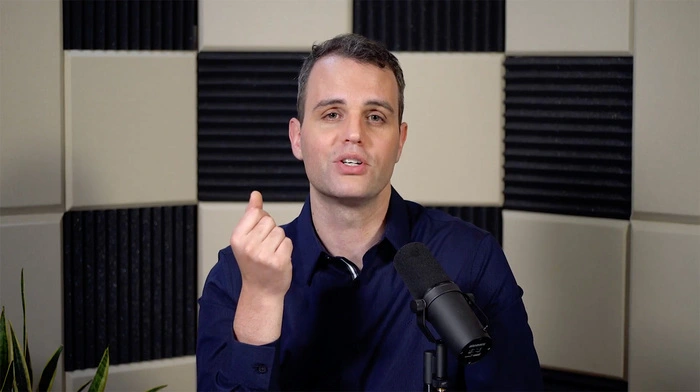
Taught by Jason Louv.

Twenty-five years in this material. 16,000+ students through Magick.Me. He wrote John Dee and the Empire of Angels — a history of the Elizabethan magic that sits squarely in this lineage. He’s taught the offshoots for two decades. This is the first time he’s taken a class straight to the source.

  • “My experience with Jason Louv as instructor has been amazing and edifying. Not only was the material truly fascinating—but also earthy and applicable to negotiating all manner of life concerns. Information is power—this is the place to be!”

    — Bonnie L., Magick.Me student

  • “The value that Jason Louv has provided... is beyond anything I have seen in the magical community, and in academia thus far. I have been in the education profession for over a decade. The compendium of knowledge and supplementary material that Jason has assembled is only rivaled by the highest echelon of academic providers. The integration of technology; i.e. biofeedback tools, Web-based analytics & blended learning techniques to extend the classroom are all hallmarks of an instructor that understands how to truly integrate the course material into a highly impactful class that benefits from the best tools available... In summary, this course is a steal for the price.”

    — Drew P., Magick.Me student

Part one of three

Three courses. Book One is what you’re buying today.

De Occulta Philosophia is three books, so this is three separate courses over one year, each its own live class. Book One is complete on its own — you can enroll in it and decide about Two and Three later. If you already know you want all three, the Complete Agrippa option below reserves all three classes now for $1,997, instead of paying $997 each ($2,991) as they open. That’s a $994 saving.

I

Natural Magic

Book One — this class — autumn

The elements, occult virtue, the planetary rulership of all things, and the mind of the operator. The foundation everything else stands on.

II

Celestial Magic

Book Two — winter

Number and its scales, sacred geometry and harmonics, the planetary squares and seals, and the image-magic of the heavens.

III

Ceremonial Magic

Book Three — spring

Divine names, angels and intelligences, consecrations and rites — closing with Agrippa’s famous retraction, read as the final seminar.

Two ways to enroll

The foundation

Book One — Natural Magic

Six weeks, live, 29 Sept–3 Nov 2026. Complete on its own — nothing held back for later books.

  • Six weeks of live teaching, Tuesdays, 90 minutes
  • A brand-new English translation of Book One, made from the 1533 Latin — no book to buy
  • Six software tools inside Magick.Me, yours for life
  • Every session recorded, yours for life
  • A small pod of 8–12 people who become the group you practice with
  • Lifetime access — run the whole six weeks again anytime

$997 $797 founding rate, one payment

$797 goes to the founding group before public enrollment opens, when tuition moves to $997.

Enroll in Book One — $797

Prefer to spread it out? Payment plans available through Klarna at checkout for US buyers — pay over time, no extra cost from us.

You have 30 days from purchase to sit with it. If it’s not for you, write support@magick.me and we send back every cent. No hard feelings.

Best value — saves $994

The Complete Agrippa — all three books

All three classes, reserved now in one decision — Book One this autumn, Book Two in Q1 2027, Book Three in Q2 2027.

  • Everything in Book One, three times over — Natural, Celestial, and Ceremonial Magic
  • All six software tools inside Magick.Me, yours for life
  • Every session across all three classes recorded, yours for life
  • A locked price for all three books, paid once, today
  • Lifetime access to all three — run any of them again anytime

$2,991 $1,997 one payment

$997 each once they open to the public is $2,991 for all three. Reserving now is $1,997 — a $994 saving, locked in today.

Reserve all three — $1,997

Prefer to spread it out? Payment plans available through Klarna at checkout for US buyers — pay over time, no extra cost from us.

You have 30 days from purchase to sit with it. If it’s not for you, write support@magick.me and we send back every cent. No hard feelings.

Both options, secured and flexible

Secure checkout by Stripe. We never see or store your card details.

Both are one-time payments — never a subscription. Two ways to pay: in full, or split with Klarna at checkout for US buyers. 30-day refund, in writing to support@magick.me.

The text

A new translation, made for this class.

Every English edition on the market descends from one 1651 translation — the first link in the chain above. We went further back, past that, to the 1533 Cologne printing (the same edition Jung kept in his library). From that Latin text, we’re preparing a modern, readable English translation, delivered chapter by chapter alongside the reading schedule.

The digital edition carries the Latin facing the English, so you can check any passage yourself. This is a teaching edition, not a critical one: our claim is that it’s clear, honest, prepared from the 1533 Latin, and unavailable anywhere else.

Title page of De Occulta Philosophia, Cologne 1533, with woodcut profile portrait of Agrippa and a handwritten Coloniae 1533 annotation
Title page of the 1533 Cologne first edition — the same printing this course’s translation is made from.

Book One, as it reads right now.

Two passages from the opening chapters — where Agrippa lays out the three worlds, then defines what magic actually is. Latin, the close translation, and a modernized working draft, side by side.

Latin — 1533, repaired

Magica facultas potestatis plurimae compos, altissimis plena mysteriis, profundissimam rerum secretissimarum contemplationem, naturam, potentiam, qualitatem, substantiam, et virtutem, totiusque naturae cognitionem complectitur.

Close translation

Magic is a faculty of very great power, full of the loftiest mysteries. It takes in the deepest contemplation of the most secret things — their nature, power, quality, substance, and force — and the knowledge of the whole of nature.

Modernized — working draft

Magic is a discipline of enormous power, full of the deepest mysteries. It covers the deepest study of the most hidden things — what they are, what they can do, what they’re like, what they’re made of, how strong they are — and the knowledge of nature entire.

Cum triplex sit mundus, elementalis, caelestis et intellectualis, et quisque inferiora superiori regatur, ac suarum virium suscipiat influxum, ita ut ipse archetypus et summus opifex, per angelos, caelos, stellas, elementa, animalia, plantas, metalla, lapides suae omnipotentiae virtutes exinde in nos transfundat, in quorum ministerium haec omnia condidit atque creavit.

Book One, Chapter 1 — opening.

There are three worlds: the elemental, the celestial, and the intellectual. Each lower world is governed by the one above it, and receives the influence of its powers, so that the Archetype himself — the supreme Maker — pours the powers of his omnipotence down into us through angels, the heavens, the stars, the elements, animals, plants, metals, and stones.

There are three worlds: the elemental, the celestial, and the intellectual. Each one is governed by the world above it and receives that world’s power. So the power flows down from the Archetype — the supreme Maker — through angels, the heavens, the stars, the elements, animals, plants, metals and stones, and finally into us.

Get Chapters 1 and 2, complete.

Leave your email and we’ll send you the opening two chapters — Latin, close translation, and the modern working draft — as soon as they’re ready to go out. Same list as the founding waitlist above; unsubscribe any time.

Don’t want to wait for either? The working edition is already live: read Chapter 2 now →

The lineage

The foundational text of the entire Western magical tradition.

Agrippa assembled Hermetic, Neoplatonic, Kabbalistic, and Arabic sources into one working synthesis. Everyone after him drew from it. Not one of those traditions copied him wholesale, and none of them would say they did — the material got absorbed so early and so completely that it stopped looking like a source and started looking like the water.

What fed him

  • Hermetica & the Corpus Hermeticum Recovered by Ficino for the Medici, 1463 — the text that restarted Western magic.
  • Neoplatonism Plotinus, Iamblichus, Proclus. The emanating cosmos Agrippa builds his three worlds on.
  • Ficino & Pico Florentine natural magic and the Christian Kabbalah that made it sayable in 1486.
  • Kabbalah & Reuchlin De Verbo Mirifico, 1494. Hebrew letter-mysticism entering Latin Europe.
  • Arabic astral magic Picatrix, al-Kindī, Abū Maʿshar — planetary images and the doctrine of rays.
  • Pliny & the naturalists The Natural History: the single most-cited source in Book One’s correspondence lists.
  • Trithemius His teacher, and the man he sent the manuscript to in 1510.
Agrippa, De Occulta Philosophia, 1533 Three books. Seventy-four chapters in Book One alone. The junction everything crosses. Backdrop: Botticelli, Primavera, c. 1480 — painted for the Medici, the same Florentine circle that funded the Hermetic recovery Agrippa drew on.

What he fed

1533 — 1651

  • The spurious Fourth Book Goetic material published under his name after his death. He didn’t write it; the tradition kept it.
  • Dee & the Elizabethans John Dee’s library held Agrippa. The angel work begins from this shelf.
  • The J.F. translation 1651. The one English text every later edition descends from.

1801 — 1888

  • Barrett’s Magus Agrippa recompiled into English with scant attribution — the conduit into the nineteenth century.
  • Fringe & high-grade Masonry Barrett taught pupils in London — reportedly including Frederick Hockley, whose protégé Kenneth Mackenzie helped found the Societas Rosicruciana in Anglia, whose leaders founded the Golden Dawn in 1888.
  • Lévi and the French revival Éliphas Lévi reads the tradition Barrett transmitted and gives it its modern shape.
  • The Golden Dawn Mathers and Westcott build the Order’s correspondence system from what was to hand.

1904 — now

  • Thelema Crowley trained in the Golden Dawn; 777 is a correspondence table in Agrippa’s lineage.
  • Wicca Gardner drew on Golden Dawn and grimoire material — the elemental and planetary frame arrives pre-built.
  • Chaos magick Even the tradition that rejects tables still argues against these ones — and draws on Austin Osman Spare, whose sigil method descends from the letter and character material Agrippa transmits.
  • Modern astrology apps Planetary hours, dignities, elections — the timing logic of Book One, running on a million phones.
  • Every correspondence appendix The herb-and-stone tables in the back of half the occult books ever printed.

The current you’re joining

Five centuries of magicians worked from this book, and most never said so. Every name below owned it, cited it, copied it, or built their system on it — documented, not rumoured. When you enroll, you’re reading the same text they read, in the tradition their names built.

  • Drawn portrait of Johannes Trithemius wearing a cap, Musée Condé, Chantilly
    Johannes Trithemius 1462–1516 Agrippa’s mentor; received and endorsed the manuscript.
  • Albrecht Dürer, self-portrait, 1500, Alte Pinakothek
    Albrecht Dürer 1471–1528 Engraved Agrippa’s Jupiter square into Melencolia I, 1514.
  • Portrait of John Dee, British School, c. 1594, Ashmolean Museum
    John Dee 1527–1608 Owned copies; built his angelic system on Agrippan foundations.
  • Hand-colored engraved portrait of Giordano Bruno
    Giordano Bruno 1548–1600 Cites Book Three directly. Burned at the stake, 1600.
  • Hand-colored engraved profile portrait of Giambattista della Porta in a ruff collar
    Giambattista della Porta 1535–1615 Magia Naturalis works squarely inside Agrippa’s system.
  • Stipple engraving of Francis Barrett by Orme, frontispiece to The Magus, 1801
    Francis Barrett fl. 1801 The Magus reproduces Books One and Two near-verbatim, unattributed.
  • Mary Shelley, portrait by Richard Rothwell, c. 1831–1840, National Portrait Gallery
    Mary Shelley 1797–1851 Frankenstein, ch. 2 — Agrippa is the book that starts Victor’s obsession.
  • Photograph of Éliphas Lévi, 1874, by Charles Revel
    Éliphas Lévi 1810–1875 Rebuilt Agrippa’s spirit of the world as the “astral light.”
  • Photograph of S.L. MacGregor Mathers in Egyptian ceremonial dress, before 1918
    S.L. MacGregor Mathers 1854–1918 Golden Dawn’s ritual architect; correspondence tables continuous with Agrippa.
  • Photograph of William Wynn Westcott, before 1897
    William Wynn Westcott 1848–1925 Golden Dawn co-founder; drew Agrippan correspondences into the grades.
  • Photograph of Aleister Crowley in ceremonial O.T.O. regalia
    Aleister Crowley 1875–1947 777 extends the correspondence tradition Agrippa systematized.
  • Photograph of Austin Osman Spare at sixteen, 1904, photographer unknown
    Austin Osman Spare 1886–1956 Took the sigil method straight from Agrippa’s letter and character material and made it his own — sigils originate here, a fact almost nobody knows.
  • Photograph of Carl Gustav Jung, photographer unknown, Ortsmuseum Zollikon
    Carl Jung 1875–1961 Owned an original 1533 Cologne printing — the same edition we translate from.
Engraved portrait of Heinrich Cornelius Agrippa in cap and fur-collared robe, writing with a quill
Agrippa, from André Thevet’s Les vrais pourtraits et vies des hommes illustres, 1584.
Color emblem plate from Michael Maier’s Atalanta Fugiens depicting an alchemical allegory in a landscape
Michael Maier, Atalanta Fugiens, 1618 — colored edition.

Who was Agrippa?

Heinrich Cornelius Agrippa von Nettesheim was a humanist, physician, lawyer, and writer who spent much of his life between courts, universities, and political trouble.

  1. 1486 Born at Cologne. Soldier, physician, diplomat, imperial secretary — usually several at once, rarely paid on time.
  2. 1509 Lectures on Reuchlin’s Hebrew mysticism at the University of Dôle, in his early twenties. A Franciscan denounces him and he loses the post — the first of many.
  3. 1510 Drafts De Occulta Philosophia at roughly twenty-three and sends it to his teacher Trithemius, who tells him to keep it quiet: "live like a hermit, publish like a coward." He circulates it privately for two decades instead.
  4. 1519 As town advocate of Metz, defends a peasant woman accused of witchcraft — against the Inquisitor himself — and wins. It costs him the job.
  5. 1533 Publishes the Three Books at forty-seven, with the Inquisition at his back and his own retraction already in print — the deniability built in before the book ever shipped.
  6. 1535 Dies at Grenoble. Legend has a black dog — his familiar, the story says — leaping into the river at his death. The legend isn’t history. That it attached to him tells you what his century thought he was.

The text itself

The ideas traveled, and so did the sentences — through five pairs of hands, each one a translator, an editor, or a compiler, each trimming a little and quietly dropping what they didn’t understand. Nobody in the chain was lying. That’s exactly what makes it hard to see.

  1. 1533 Agrippa’s Latin De Occulta Philosophia, printed at Cologne. The source. Everything below is a copy of a copy.
  2. 1651 The J.F. translation One anonymous English translation, 118 years later. Every commercial edition on the market today — Tyson’s annotated standard included — descends from this single text.
  3. 1801 Barrett’s Magus Francis Barrett recompiles Agrippa into English — mostly silently, barely crediting him. Cuts, compressions, and misreadings enter the record as though they were original.
  4. 1888 The Golden Dawn The Order builds its correspondence system on what was to hand — Barrett among it. Mathers, Westcott, and Crowley after them inherit the compressions along with the substance.
  5. Now The table in your book Every modern correspondence list, every planetary-hours app, every herb-and-stone appendix. Four hundred years downstream, and nobody checks the source.

You’re reading the actual source, not a copy of a copy. In week six, you’ll put Barrett’s 1801 text beside the 1533 Latin yourself, side by side, and see with your own eyes exactly how much got lost along the way.

Hand-colored portrait of Francis Barrett beside his own natal chart, from the 1801 first edition of The Magus
Francis Barrett with his own natal chart, from The Magus, 1801 — the book that carried Agrippa into the Golden Dawn era all but unnamed.

Is this you?

Here are both lists, so you know what you’re walking into.

This is for you if

  • Yes:You want the source itself — whether you’ve practiced for twenty years or are just now discovering the tradition has one.
  • Yes:You’ve wondered who decided a particular herb belongs to Mars, and on what grounds.
  • Yes:You want to test operations and log what happens, rather than take them on faith.
  • Yes:You can give this six to eight hours a week for six weeks.

This is not for you if

  • No:You want spells fast, with no reading.
  • No:You want to watch rather than practice — this is a lab, not a lecture series.
  • No:You’re looking for the dangerous material. Nothing toxic, nothing involving animals, nothing ingested, no bindings aimed at other people.
  • No:Six to eight hours a week isn’t available right now. Come to Book Two instead.

Before you decide.

Do I need to be a practitioner already?

No. The course assumes intelligence, not experience. Agrippa begins with the architecture of the world and builds everything from first principles — which is exactly how we read him. Twenty-year practitioners will find the ground under their practice; newcomers arrive with the one real advantage: nothing to unlearn.

Do I need to buy the book?

No. The translation is included with enrollment and delivered chapter by chapter alongside the reading schedule. If you already own Tyson or Purdue, bring them — chapter numbers are identical across editions.

Do I need Latin?

No. The digital edition carries the Latin facing the English so you can check any passage you want to, but nothing in the course requires you to read it.

Do I need to know astrology?

No. The planetary timing system is taught from the ground up in the first three weeks — that’s one of the six things you leave with.

What if I can’t make a live session?

Every session is recorded and posted, and you keep them for life. The pods and the Discord run asynchronously, so the class still works around your schedule.

How much time does this actually take?

Six to eight hours a week: reading two to three, the live session ninety minutes, the operation one to three, and logging about an hour. It’s a real commitment and we’d rather you knew that now.

Is anything in this dangerous?

No. We selected the operations that can be honestly and safely attempted. Nothing toxic, nothing involving animals, nothing ingested, and no bindings directed at other people. Where we cut something we say so in the text and explain why — reading old books critically is part of what the course teaches.

Do we read Barrett’s Magus too?

Not as a text — as evidence. Barrett’s 1801 Magus is largely Agrippa recompiled into English with scant attribution, and it’s what the Golden Dawn had to hand, so his cuts and misreadings were inherited by everyone downstream. In week six we put a page of it beside the 1533 Latin and you find the divergences yourself. Reading Barrett for content would teach you Agrippa at two removes, which is the exact problem this course exists to fix.

Is this a subscription?

No. One payment and you’re done — never a recurring charge, nothing to cancel. Klarna is available at checkout for US buyers if you’d rather split it. And the risk runs the other way: our standard refund policy applies, so you have 30 days from purchase to ask for your money back, in writing to support@magick.me.

What are the instruments, exactly?

Six tools, built into Magick.Me and yours to keep once you enroll: a Planetary Clock, an Operation Composer, a searchable table of correspondences (which plant, stone, or day belongs to which planet), an annotated Apothecary, an Augury Reader, and Chat With Agrippa — an AI trained on his text and the library behind it. The images on this page are design mockups. Each tool ships across the six weeks of the class, and each one shows you exactly which chapter it came from.

What happens after Book One?

Book Two (Celestial Magic) follows in winter, Book Three (Ceremonial Magic) in spring. Book One stands on its own as a complete thing — and it’s also the beginning of the complete Agrippa. If you already know you want the whole arc, the Complete Agrippa covers all three classes at $1,997, and the waitlist gets first claim on it.

Founding tuition · Book One only

Seventy-two seats. One run.

$997 $797 founding tuition — Book One

This is Book One only — six weeks live, the new translation, six tools for life, every session recorded, a pod that shows up with you, lifetime access. Books Two and Three are separate courses in later classes. Seats are capped at 72 total, split into pods of 8–12. Founding tuition ends when this opens to the public, so this is the best rate it’s at right now.

Read it, sit with it, work the first sessions. You have 30 days from purchase. If it’s not for you, write support@magick.me and we send back every cent. That’s the whole promise.

No subscription — one payment, done. Two ways to pay: in full, or split with Klarna at checkout for US buyers. Checkout is handled by Stripe.

Secure checkout by Stripe. We never see or store your card details.

Dates
29 Sept — 3 Nov 2026
Live
Tuesdays, 90 min
Commitment
6–8 hrs / week
Text
Included — no book to buy
Prerequisites
None. No Latin.

Join the waitlist and you’re in the founding group at $797. Wait for public enrollment and you’ll pay $997 for the same six weeks. Either way, you finally get to work from the whole book.